It was quite magical, I must say. On a fine June afternoon, I took the 10-min drive from home to Universal Studios getting there at 4:55 pm. Unfortunately I forgot that had I waited another 5 mins, parking would have been $10 instead of $40. Lesson learned! Anyway, they directed me to the ET parking after which I walked all through Universal Citywalk to get to the theme park entrance. Once inside, I decided to go straight to the lower lot for the Jurassic ride. It took a while going down the four long, slow escalators but the view was fun! The wait for the Jurassic ride said 35 mins, but when I got through the line, it was more like 15. And what an incredible ride!
Then, I went to the Mummy ride to keep going with the flow and try to get as many as possible before 7 pm. The Mummy ride said 49 mins of wait but I think it took me around 20 to get on the ride. I thought the ride had its thrills but it was more funny than scary. Nice speed and jumps but the digital visuals didn’t do it for me. I got out of there and headed straight to Transformers. This one said 25 mins wait but I was on in 5 mins! How wonderful! I had already done this one in Singapore and it was just like how I remembered. Super fun!
That was enough for the lower lot. I couldn’t leave without going back to my favorite – The Wizarding World of Harry Potter. I breezed through the Forbidden Forest single rider line in 3 mins and enjoyed the thrilling ride through Hogwarts. And then was the best part of my evening. I walked into The Three Broomsticks when there was barely anyone there. I ordered a lager and some fries and sat there for almost 45 mins admiring the brilliant setup and music! Perfect way to end the evening (around 7:30 ish) and walk out 🙂
What four days at the Databricks Data + AI Summit taught me about making agentic analytics actually work
I spent this week at DAIS 2026 in San Francisco — four days of sprinting between buildings, conference rooms, and keynote halls to catch as many sessions as possible. I tried my best to get a full picture, not just the headline announcements.
Sessions included Intelligent Document Parsing with Lakeflow, AI Mesh: The Age of AI Products, Your AI Strategy is Only as Good as Your People Strategy, How J&J Medtech and Takeda Scale Data & AI, An Intro to Building & Scaling Agentic Apps, Agentic Analytics on the Databricks Lakehouse, and Latest Innovations in AI/BI for Business Users.
The energy was electric. The keynote session was attended by over 30,000 professionals – I had never been in a room like that before. The demos were impressive. And one slide — almost easy to miss in the middle of a packed breakout session — said something that has stayed with me:
“Most organizations don’t have an AI innovation problem. They have a reuse, governance, and trust problem.”
This diagnosis lands with particular weight in regulated, data-intensive industries like life sciences.
The Pattern We Keep Seeing
Across industries, a common AI adoption story plays out like this: a team identifies a high-value analytics problem, builds something smart to solve it, and sees real results. Then another team does the same — independently, for their own version of essentially the same question. Then another.
Each effort is genuinely useful. Each one also operates in isolation: its own data assumptions, its own logic, its own definition of the metrics that matter. There’s no shared semantic layer — no governed, agreed-upon source of truth that all these efforts draw from. No common framework for what “on track” means, or how performance is measured, or which numbers are approved for which audiences.
The result isn’t a lack of AI capability. It’s a proliferation of disconnected outputs that are difficult to reconcile, expensive to maintain, and nearly impossible to scale across a large user base.
The next use case starts from zero. Again.
This is the AI pilot trap. And based on the sessions I attended – looks like it’s everywhere.
What “Agentic Analytics” Actually Requires
The most useful framing I took away from DAIS came from the session on Agentic Analytics on the Databricks Lakehouse. The presenters used the example of a data analyst “Jess” and laid out three failure modes with uncomfortable clarity:
Accuracy — Agents lack the semantic grounding to write accurate queries. Ask an agent “what’s our dropout rate in the APAC region this quarter?” and it will give you an answer. Whether that answer matches your function-specific definition of dropout, your certified enrollment table, or your SME-approved denominator — that’s a different question entirely.
Governance — What data and tools are the agents allowed to access? Who approved this agent’s access to a certain table? Can it write to operational dashboards? Does it behave differently depending on who’s asking? Agents access data and tools in ways that weren’t designed for them.
Scale — Agents that work in a pilot cause performance and cost problems at enterprise scale. Lightning-speed query response times and predictable infrastructure costs aren’t luxuries when you’re running analytics across hundreds of trials for thousands of users.
These are the exact failure modes that could turn a promising clinical ops AI initiative into a governance escalation.
The Architecture That Changes the Equation
What Databricks laid out — and what I think is genuinely the right pattern for enterprise analytics teams — is a four-layer answer to these three problems:
Compute (Lakehouse RT) — gives you the scalable, cost-efficient foundation. Sub-second responses across large clinical datasets without unpredictable cloud bills.
Governance (Unity AI Gateway) — acts as a single control plane: agent registry, access control, contextual policies, cost budgets, and tracing. One place to govern both data and AI. One place to ask “who approved this?” and get an actual answer.
Semantics (Genie Ontology) — THIS, for me, what the most valuable aspect of the entire conference. It is the piece that made every room lean forward. Rather than each team maintaining their own definitions, you build a shared business ontology — enrollment milestone timelines, regional performance benchmarks, patient dropout criteria — once, in a governed layer, and every agent draws from it. This can be defined based on functional definitions. An agent querying trial performance doesn’t decide what “on track” means. The ontology does.
Agent Choice — deploy through Genie One, custom agents, or MCP endpoints, wherever your users actually work: in MS Teams, in your clinical ops portal, in a mobile dashboard during a site visit.
The phrase from the keynote that stuck: one platform, one identity model, one governance plane.
The Harder Question: Who Owns This?
The most practically useful session I attended was on “AI Products” — not AI features, not AI pilots, but AI products. The framing was simple: the domain owner defines the reusable business capability before the team implements the agent.
In clinical trial operations, that means someone has to own the answer to: what is our certified definition of enrollment rate? What’s the governed source of site dropout data? Which metrics are approved for executive reporting versus investigational use?
That’s not an engineering question. It’s a data leadership question. And the organizations that answer it first — that build once, govern once, and compose many times across their agent ecosystem — are the ones that will turn AI pilots into AI infrastructure.
The ones that don’t will keep rebuilding the same agent, for the same question, on the same data, six months from now.
Dilip Merala is a Data & AI Analytics Manager specializing in clinical trial operational analytics. He attended the Databricks Data + AI Summit 2026 in San Francisco.
We visited Uovo for date night on a hunch – last minute plan to drive down (10 mins ) and get in the queue as they don’t take reservations. Since it was closer to 6 pm than 7 pm, we got lucky with just a 15 minute wait. And what a delicious evening it was!
We went for the “Cheese & Truffle tasting” which gave us a Yellowtail crudo appetizer, 3 lipsmacking pastas and a Tiramisu – all BIG HITS! I was apprehensive of the quantity not being sufficient for both of us, but I was wrong. It was PLENTY!
The pasta is flown in daily from Italy, so that’s something! The biggest draw though was sitting at the bar and watching the chefs at work. Front row seats to how the machinery works and how the chefs weave their magic was quite mesmerizing.
My favorite – the Tagliatelle in truflle sauce! MUST GO BACK!
This simple, disarming ice-breaker often makes me reflect on my identity and origins. My grandparents were farmers and shepherds in the foothills of Tirupathi, Andhra Pradesh in south India. My grandfather moved to Mumbai to work in a mill in the ’40s. My Dad was born in Mumbai and so was I. When I was growing up in Mumbai, since people knew my native tonue wasn’t Marathi- I got the question, “what’s your mother tongue” which was another way of asking where my people came from. The answer, of course, was Telugu and Andhra Pradesh. Then, when I started traveling across India, people asked me again – “Where are you from?” and the answer to them was – “I am from Mumbai”.
I spent most of my life in Mumbai. When I was 32 years old, I moved to the United States in search of better prospects. Studying in Dallas at a university that hosted students from across the globe, I naturally got the question again. My answer then changed from “Mumbai” to “India”. Two years later, I moved to Los Angeles and started working here. I met my wife here and have been calling this place home for almost 6 years now. So now when we travel to other parts of the US or the world, when someone asks me – “where are you from?”…. I take pause. My mind wonders and wanders. What’s the right answer here? Andhra Pradesh? Mumbai? India? Los Angeles?
They are all part of me. I still mostly feel like a Mumbai lad, but Los Angeles is my new home. Thanks to my wife and in-laws, I now feel like I belong here. So my answer these days is “Los Angeles”. And what if someone in LA asks me this question? Nobody here has actually asked me this question 🙂
We had been meaning to get back to Cambria since we got engaged there. Other trips took priority and coming back to Cambria kept getting delayed. Then, the perfect opportunity came along. We hadn’t met my friends Gayatri and Sandeep since our wedding. They live in Northern California so we thought we will split the difference and meet midway in Cambria.
The visit was delightful as always. We stayed at the Sand Pebbles Inn and visited our favorite spots. Getting to spend time with Gayatri and Sandeep was icing on the cake. TIme was spent having breakfast at the Hidden Organic Kitchen and then walking around town exploring some antique stores and charming shops. We went for lunch to the Opollo winery and enjoyed some conforting pizza and wine. Dinner at Robin’s was a treat as usual. And for a change, the next morning we went to the west side of Cambria to have a mimosa brunch at a place called… wait for it… Cambria Mimosas Steak & Seafood.
We bid our goodbyes around lunchtime with the hope and promise that we will see each other again soon!
For a while, I have been complaining that there’s a lull in good film and TV content. A few years ago, I remember how there used to be a lot of excitement year after year as people waited in anticipation for a new season of Game of Thrones or The Big Bang Theory. It’s been a while since I have seen such a global frenzy or even shows that make you eagerly wait for the next episode. Until early this year, that is. Since my return from India in January 2025, I have watched some exhilarting stuff making me feel that well-written, well-shot, excellently performed, entertaining content is back in our lives.
It started, of course, with Apple TV’s Severance – an incredible, unique take on work-life balance/imbalance and identity. I’ve been waiting for this one ever since we finished watching season 1 last year and the second season did not dissapoint. 10 episodes went by real quick and I am already waiting for the next one. I did read an article that each episode takes $20 million to make and that makes me think how many more seasons they can sustain. The production house is called ‘Fifth Season Productions’ so may be that’s a hint.
The next one I liked is HBO’s The Pitt – yet another medical drama but nothing like I have ever seen before. I got interested in it as I saw John Wells (of The West Wing fame) was one of the Executive Producers. Heartbreaking at times, this show has a cool cast of actors I am witnessing for the first time (seriously, I have not seen a single one of these actors before and they are wonderful). It’s the story of a day in an emergency room with each episode portraying an hour starting 7 am.
And then there is HBO’s The White Lotus! Returning for season 3 set in Thailand this time, this show is a quirky take on luxury travel and the contrast between the lives of rich people on vacation vs those of the local staff. A couple of our favourites – Amy Lou Wood and Carrie COon – are in this season so that makes it all the more exciting. This shows is lways a cool mix of funny, thrilling and sometimes cringy!
The White Lotus on Max
And finally, the one that blew my mind away is Netflix’s Adolescence. Without giving away much, I can say it’s some of the best performances and cinematography I have seen in… well.. ever! It could be sad (especially for parents) but a stunning experience for actors and writers. It’s one of those thrilling shows that’ll make you sit quietly and think once you are done with it. Shoutout to Owen Cooper, whose performance took my breath away.
I should probably not spend this much time watching TV, no? Time to dive into a book for a bit!
I’m all set to appear in another radio show produced by Mary Main Productions. Once again, I am fortunate to voice various characters in 4 stories but especially – detective Nick Charles, solving and preventing crimes with his wife Nora Charles (played by my better half, Summer). This interesting format where actors appear on stage as characters from 1930s radio artists and read from a script has been quite new and revelatory for me. Here’s some marketing material.
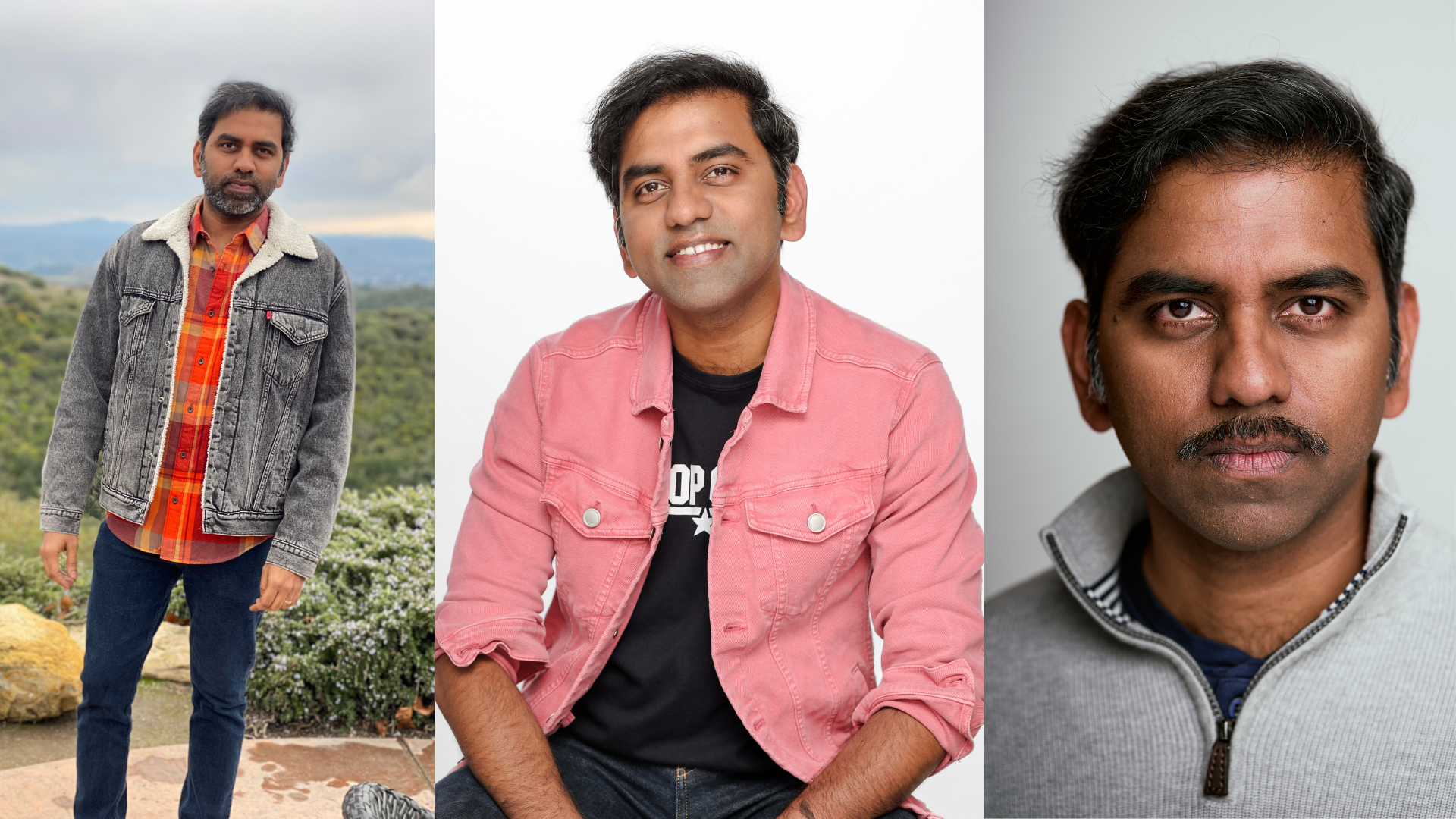
Thanks to our wonderful wedding photographer, Stephen Tang, I have some new headshots. It took a while to contemplate the pros and cons of the mustache look. Here are the results:
Our anniversary trip to Portland this July turned out to be quite a wonderful experience. It reminded me of Mumbai to Goa getaways back in India, mostly because of the short flight from Los Angeles and the laid-back pace of Portland. It’s always nice when we can fly out of Burbank airport (just 15 mins from home) instead of LAX, which turns into an ordeal due to traffic close to the entrance. Thanks to easy Burbank to Portland flight availability, our travel was absolutely hassle-free.
Portland
The plan for the vacation was simple – spend 3 nights away from the city in Mcminnville in a sprawling vineyard, and then 3 nights in the city of Portland exploring its famous food scene. The Youngberg Hill Vineyard and Inn was in most part a rejuvenating experience with magnificent views from our room and a really cool vineyard with many charming spots to take walks and hang out. A day trip to Cape Meares Lighthouse was a great way to experience the Oregon coast. We even enjoyed the 4th of July fireworks in downtown McMinnville right thorugh the large windows of our glorious Jura room at The Youngberg Inn. Unfortunately, we had to cut our stay at the Inn one day short due to a wasp incident at the Inn and unavailability of staff to help us out. (This changed our rating of the place from 5 stars to 3.5 stars). Nevertheless, Best Western came to our rescue for one night, reminding us that sometimes the simplest of hotels can do a fantastic job of hosting guests and making sure they have a good time. We were still able to keep our dinner reservation at the La Rambla downtown and left for the city the next morning.
Our Airbnb stay in Portland was simply PERFECT. The Japanese zen-themed apartment overlooking a green cliff was just marvelous. Thanks to our gracious host, we felt at home right away and the thoughtful, artistic decor in the apartment put us in quite the dilemna – how much time to stay in vs how much time to spend outdoors exploring the city? Thankfully, we didn’t have to plan too much as just going with the flow worked out fine for us.
Cape Meares
Walking up and down the NW 26th Ave and streets around it gave us a good taste of Portland. Food at places like Duck House, Swagat, Papa Haydn was impressive. Our most memorable gastronomic experience was Janken where we had our anniversary dinner. The way the chefs brought out the food and explained each course reminded us of our favorite show, The Bear. The interior of the restaurant was pretty and worthy of a special occasion. Staff was really sweet and professional. Some other aspects of Portland we enjoyed were – taking the stairs to easily go from the top of a hill to a different part of the city, Powell’s books (this book store is huge – takes an entire block), dessert at Papa Haydn, a drive to the Columbia scenic river gorge, visits to some charming coffee shops, and the absolutely stunning and serene Japanese garden.
Historic Columbia River Gorge
All in all – Portland feels like a cute, charming city which doesn’t try to catch up with other big shots. Traffic is manageable, you can relax or got out and have fun as you please, people seem generally happy, weather is considered to be pleasant all year (we did go during a heat wave weekend and were still happy). You have the hills, the ocean, cute houses, great food and drinks, and enough inspiration for a whole TV show that has its own channel now. Can’t ask for much more, no?
For several years, when I used to back pack across India or take trips with my friends, I used to imagine a time in the future when the woman I love will be with me and we will travel to gorgeous locales around the world. That vision seems to be coming true, one trip at a time. I am living in it now.
Where I grew up, the meaning of a “horror film” was a movie with several scares, some kind of ghost and/or at least one episode of posession/excorcism. However, according to the Oxford dictionary and my wife (I trust the latter more really), “horror” means an intense feeling of shock, fear or disgust. As such, many films with no ghosts or exorcisms whatsoever fall under this category. On recently learning that Stanley Kubrick claims it’s the most terrifying movie he has watched, we chose ‘The Vanishing’ (“Spoorloos” in Dutch) for our movie night. (Spoliers ahead) We paid $3.99 on Apple TV to rent it and spent a little under two hours experiencing, what I thought, was a brilliant take on a scary abduction.
This actor looks a lot like Anupam Kher
I enjoyed several parts of the film. First, there is no attempt to make it a whodunnit. Quite early on in the movie, you know who did it. And still, the movie kept me engaged and on the edge of my seat. Second, I found the frames and cinematography to be very artistic. Set in France, the film did a pretty good job of giving me a sense of some French locales without making it look touristic. Third, I thought the way music was used in this film was quite interesting. It had a fine blend of silent montages with sporadic instrumental dramatic tunes. It playded well to build up the tension while still doing justice to the artistic shots. Then, the performances were quite impressive – especially Johanna ter Steege as the lively and vulnerable victim. Although I was listening to foreign languages (Dutch and French), their performances transcended the language barrier and I didn’t have to rely too heavily on the subtititles. Finally, what drove it home for me was the excellent use of metaphor. Two golden eggs floating in space. You’ll know it when you watch it.
The Vanishing
We felt a sense of heaviness once we finished watching and I can say that this one will stay with us for a bit. Kudos to the entire team of this wonderful 1988 “horror” thriller.